Headline
Airlines focus on recovery ops after system glitch fiasco

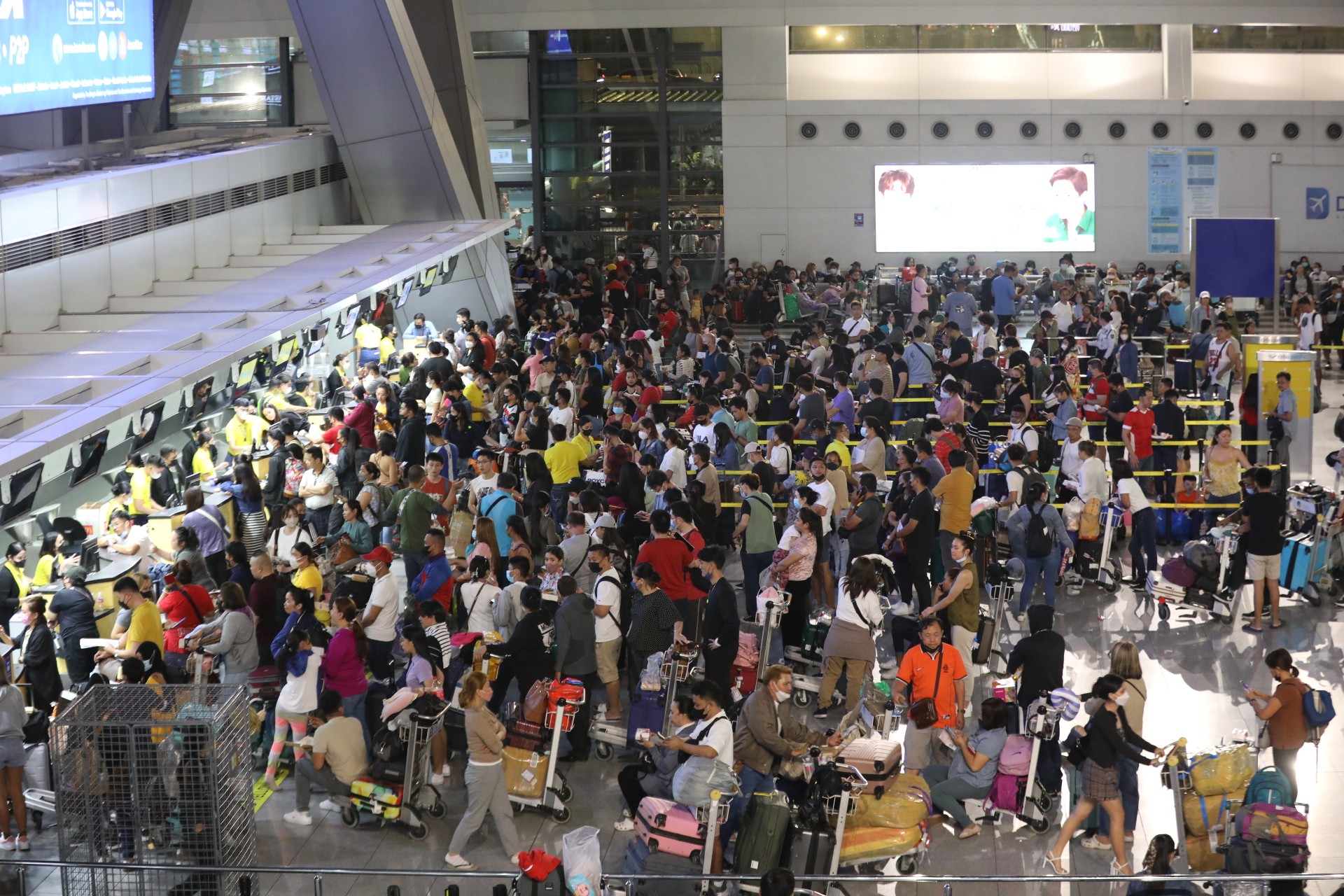
FILE: Thousand of passengers were stranded on New Year’s Day (Jan. 1, 2023) at the Ninoy Aquino International Airport Terminal 3 (NAIA 3) in Pasay City due to “technical issues” of the air traffic management system of the Civil Aviation Authority of the Philippines (CAAP), according to Transportation Secretary Jaime Bautista. Normal operations resumed on Tuesday (Jan. 2). (PNA photo by Avito Dalan)
MANILA – Local carriers are now focusing on mounting recovery flights following a number of cancellations due to the Civil Aviation Authority of the Philippines’ (CAAP) air traffic management technical issue on Jan. 1, executives reported Monday.
“We are working on restoring normal operations following the glitch. So far, Cebu Pacific (CEB) successfully dispatched the first wave of international flights. We are now working on mounting extra sections for passenger recovery,” CEB spokesperson Carmina Romero told the Philippine News Agency.
Romero said CEB had to cancel 259 flights, affecting 26,253 passengers on Jan. 1. Since the cancellations, delays and diversions have a consequential effect, the carrier has canceled 75 flights, affecting 1,578 passengers on Monday.
“Hopefully, all these will clear up,” Romero said, adding that CEB is encouraging passengers to manage bookings online.
Philippine Airlines (PAL) spokesperson Cielo Villaluna said the airline is also focusing on recovery operations in the Manila hub, and aims to complete these flights within the day.
She noted that the recovery flight operations, however, creates a domino effect, delaying the flights supposedly scheduled for Monday.
“We could not fly back our planes yesterday even with restart of airport operations (at 4 p.m. Sunday) because flight arrivals are limited to 15 per hour,” she explained.
Villaluna said 244 flights and 24,000 PAL passengers were affected by the system glitch on Jan. 1.
The Manila International Airport Authority said an estimated 65,000 passengers were affected by the technical issue at the Air Traffic Control (ATC) as of Sunday night.
Meanwhile, in a statement on Monday, CAAP said the Communications, Navigation, and Surveillance / Air Traffic Management (CNS/ATM) System encountered power supply failure, and its uninterruptible power supply (UPS) also failed.
The main cause of power supply problem is still being determined, according to CAAP.
“Despite the circumstances, CAAP, alongside concerned authorities, has ensured that no aircraft or passengers were harmed. CAAP is grateful to its air traffic management officers, air navigation system officers, and other staff involved in ensuring that the country’s air traffic maintained its safety in spite of the power failure encountered by the system,” it said.
CAAP said it has already made recommendations on improving the air traffic management system.