Science
Why do scientists care about worms?

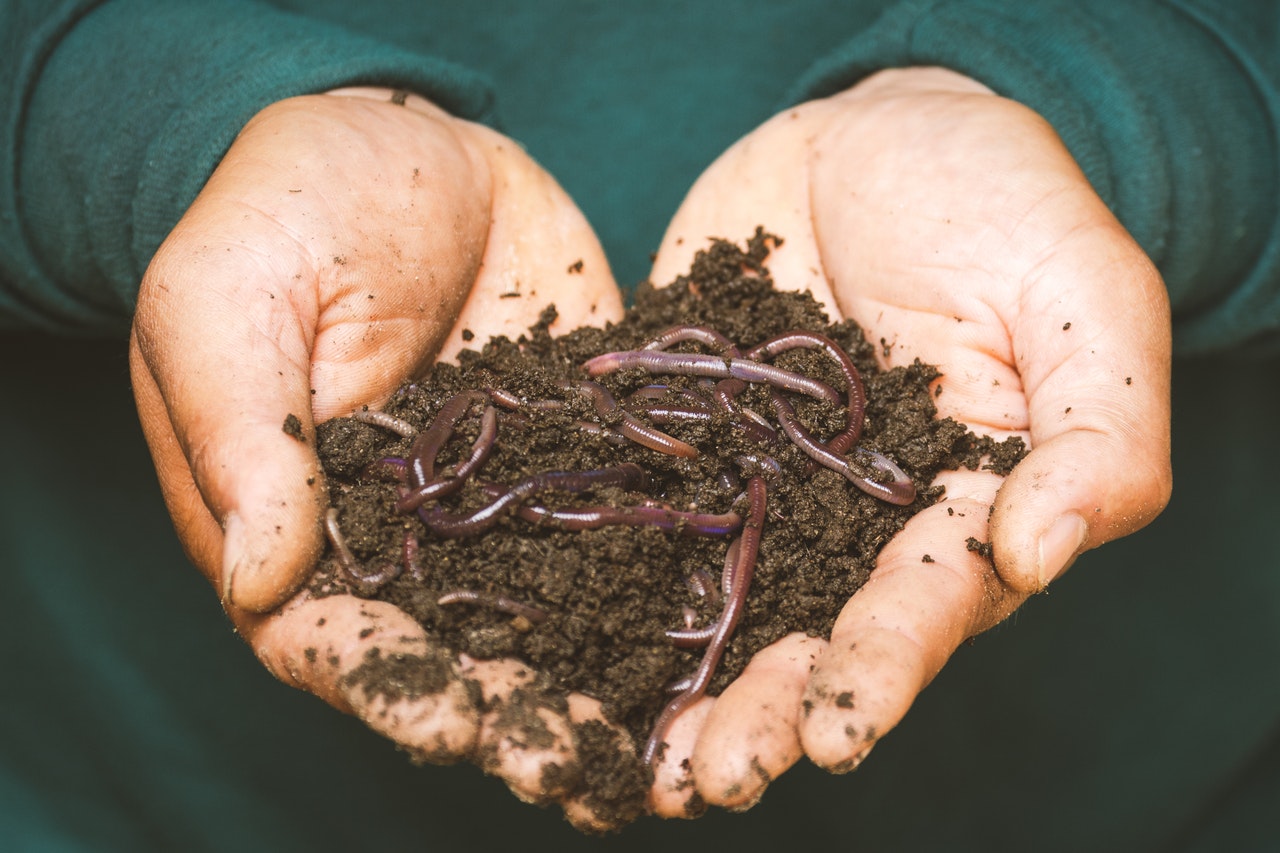
The fact that I devoted so much study to this boring-looking worm was a source of great amusement to my friends. (Pexels photo)
I traveled to a marine research station on a picturesque Swedish fjord many times over the four years I worked on my Ph.D. What brought me back again and again? Buried in the mud off the west coast of Sweden lives a small orangey brown worm, which, to the untrained eye, looks entirely insignificant.
The fact that I devoted so much study to this boring-looking worm was a source of great amusement to my friends. To them, and perhaps to most people, the word worm conjures up the idea of a fat pink earthworm. So why sift through tons of mud from a freezing Swedish fjord to find a handful of animals I could dig up in the garden?
Broadly defined, a worm is any relatively small soft-bodied animal, but there’s an amazing amount of diversity in this group. These animals live across the globe, and some of them are remarkably resilient; they can be found in habitats ranging from deep-sea hydrothermal vents to lakes that are three times saltier than the sea. “Worm” is really a catchall term for a huge variety of animals with different characteristics that span the tree of life.
This diversity means that scientists from many different disciplines are interested in lots of different species of worms. For instance, my worm from the fjord, called Xenoturbella bocki, holds a pivotal position for understanding animal evolution.
At first glance you might think that people and all these worms have very little in common. But really, many worm species provide opportunities for scientists to perform basic research on cells and systems that can be translated into information about our biological origins, and even relevant applications for human development and health.
Regeneration
If your head is chopped off, you won’t grow a new one. But if you were a planarian flatworm, you wouldn’t just grow a new head – your head would also grow a new body. Cut one of these inconspicuous worms into hundreds of tiny pieces, and you’ll end up with hundreds of new animals. Planaria are truly the masters of regeneration.
In order to achieve this feat, both the instructions and the materials for constructing a new body must be present in each of those fragments. These building blocks are called neoblasts: stem cells distributed throughout the worm that have the potential to become any adult cell type.
[Like what you’ve read? Want more? Sign up for The Conversation’s daily newsletter.]
Planarian regeneration research has some surprising applications. Scientists can investigate which genes keep neoblasts in a flexible state, or direct them to become specific cell types during the regenerative process. This research won’t help researchers learn how to regenerate new human heads, but it can inform their understanding of wound healing or suggest new targets for cancer research.
Fossil record
If there were a prize for the most unfortunate-looking worm, it might go to the name-says-it-all “penis worms,” formally known as the Priapulida. Their unlucky appearance actually makes priapulids very well adapted to burrowing into the soft sediment where they live.
This behavior leaves a valuable legacy. The fossilized traces of burrowing worms represent some of the most important fossils recovered from the Cambrian era. The first early representatives of most of the major animal groups date to this geological period, which began around 540 million years ago. Evidence indicates that priapulid-like worms created these trace fossils as they burrowed into the soft substrate where they lived.
These ancient ancestors mean that Priapulids have been described as “living fossils.” Studying their developmental genetics offers an insight into the ancient origins of the different cell types and organs we find in animals today.
For example, by understanding how modern priapulids make their guts, scientists can infer the developmental processes and genes that shaped the guts of animals living hundreds of millions of years ago. Then, researchers can better understand how different animals have refined and modified what their gut looks like and how it is patterned in response to their environment and diet.
Where did eyes come from?
Even to Charles Darwin, the evolution of the eye posed a conceptual problem. How could such a complex structure have arisen through natural selection?
A relative of the earthworm and the leech, an annelid called Platynereis dumerilii, turns out to be an important animal to help understand how it happened. Platynereis is particularly slowly evolving, and, similar to priapulids, provides a window into the features found in our very ancient ancestors.
Platynereis larvae have one of the simplest eyes in the animal kingdom: a two-cell structure comprised of a photoreceptor, capable of detecting light, and a pigment cell. But it has an additional type of photoreceptor in its larval brain – one that is also found in the vertebrate eye. This suggests that both of these photoreceptor types were present in an ancestral animal. By investigating how Platynereis uses these cells, scientists can hypothesize the steps by which cell types and circuitry ultimately were integrated to create the vertebrate eye.
The world of worms extends far beyond the humble earthworm in your backyard: There are literally millions of different species living all across the world. The examples outlined here are just a small representation of that diversity and the unexpected reach that research on these critters can have.
Helen Robertson, Postdoctoral Scholar of Organismal Biology and Anatomy, University of Chicago
This article is republished from The Conversation under a Creative Commons license. Read the original article.