Headline
Metro mayors to implement stricter GCQ

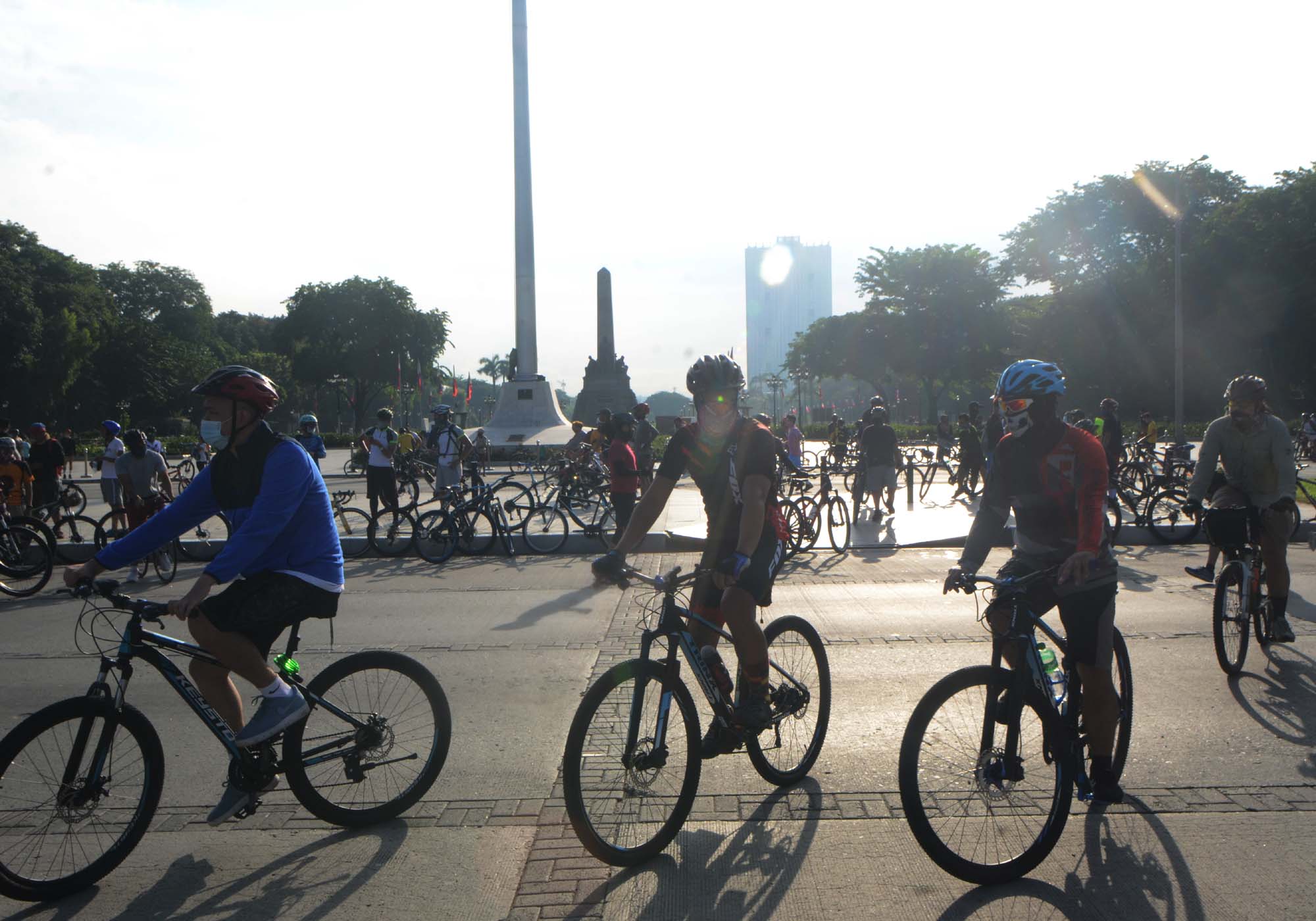
FILE: SUNDAY EXERCISE. With the further easing of quarantine restrictions in Metro Manila, bikers flock to Rizal Park in Manila. (Photo by Avito C. Dalan)
MANILA – Metro Manila mayors vowed to impose stricter quarantine protocols to curb the rise in coronavirus disease (Covid-19) cases, Interior Secretary Eduardo Año said on Thursday.
President Rodrigo Duterte initially wanted to revert Metro Manila to a modified enhanced community quarantine based on the recommendation of experts from the University of the Philippines (UP) but decided that the metropolis will remain under GCQ after mayors vowed to implement more proactive restrictions.
Noting that he is frequently meeting with Metro Manila mayors, Año said he recognizes their sentiments on gradually opening up the economy without compromising public health.
“They will give businesses the chance to reopen but this will be subject to the strict implementation of all protocols. We will give passes to those who are allowed to move or travel, especially employees while we will be stricter on those who are not allowed to go out,” he said in Filipino in a radio interview.
Año warned residents of Metro Manila over the possible re-implementation of the strict MECQ if they continue to violate protocols.
“We expect a stricter enforcement here in NCR (National Capital Region) and we continue to remind our fellowmen to comply with the protocols because we need to be vigilant and if we do not comply, we might revert to MECQ,” he added.
With the strict enforcement of quarantine rules, Año believed that this will discourage those without any essential business in going out to stay at home.
In case the situation does not improve after the July 31 deadline, Año said President Duterte will have no choice but to revert the NCR to the more restricted community quarantine.
Aside from Metro Manila, Duterte also placed the following areas under GCQ: Laguna, Cavite, and Rizal for Region 4-A (Calabarzon); Lapu Lapu City, Mandaue City for Region 7 (Central Visayas), Ormoc City, Southern Leyte, Zamboanga City, Butuan City, Agusan del Norte and Basilan.
The cities of Talisay, Minglanilla, and Consolacion in Cebu province will also be under GCQ.
Areas under “medium-risk” modified general community quarantine (MGCQ) are: Cordillera Administrative Region (CAR) – Benguet, Baguio City; Region 1 (Ilocos ) – Ilocos Sur, Pangasinan, Ilocos Norte, La Union, Dagupan City; Region 2 (Cagayan Valley) – Cagayan, Isabela, Nueva Vizcaya; Region 3 (Central Luzon) – Bataan, Nueva Ecija, Pampanga, Bulacan, Tarlac, Zambales, Angeles City; Region 4-A (Calabarzon) – Batangas, Quezon, Lucena City; Region 4-B (Mimaropa) – Oriental Mindoro, Occidental Mindoro, and Puerto Princesa City.
Also under medium-risk MGCQ are: Albay, Masbate, Camarines Norte, Camarines Sur, Catanduanes, Sorsogon, Naga City for Region 5 (Bicol); Iloilo, Negros Occidental, Capiz, Antique, Aklan, Guimaras, Iloilo City, Bacolod City for Region 6 (Western Visayas); Negros Oriental, Bohol, Cebu Province for Region 7 (Central Visayas); Western Samar, Leyte, Biliran, Tacloban City for Region 8 (Eastern Visayas); Zamboanga del Sur, Zamboanga Sibugay, Zamboanga del Norte for Region 9 (Zamboanga); Misamis Occidental, Bukidnon, Lanao del Norte, Cagayan de Oro City, Iligan City for Region 10 (Northern Mindanao); Davao Oriental, Davao del Norte, Davao del Sur, Davao de Oro, Davao City for Region 11 (Davao region); Sultan Kudarat, Cotabato, South Cotabato, General Santos City for Region 12 (Soccsksargen); Lanao del Sur, Maguindanao for BARMM; and Agusan del Sur, Dinagat Islands, Surigao del Norte, and Surigao del Sur Region 13.
The rest of the country will remain under “low-risk” MGCQ until July 31.