News
New England seeing a huge spike in beached sea turtles

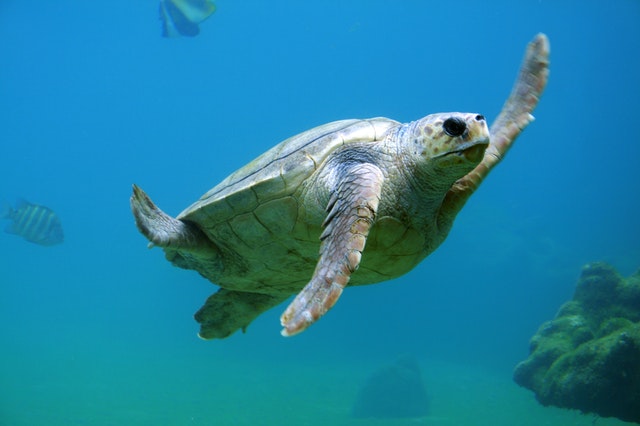
At a sea turtle hospital housed at an old New England shipyard, a biologist leans over a table and uses a needle to draw blood from a sick loggerhead before tagging its flailing flipper. (Pexels Photo)
QUINCY, Mass. — At a sea turtle hospital housed at an old New England shipyard, a biologist leans over a table and uses a needle to draw blood from a sick loggerhead before tagging its flailing flipper.
These were the first tentative steps toward a return to the ocean for this juvenile nicknamed Honey Bun and hundreds of other loggerhead, Kemp’s ridley and green turtles stranded this winter on Cape Cod beaches.
The number of warm water turtles stuck on beaches here has risen dramatically in the past decade, according to the Mass Audubon’s Wellfleet Bay Wildlife Sanctuary. This year, volunteers recovered 829 helpless turtles washed up on the sand — about half of them dead including some frozen solid. That’s nearly twice what they found in 2016 and 10 times more than in 2008.
Cape Cod is believed to have one of the largest annual turtle strandings in the world. There are occasional strandings in Florida, Texas and as far north as the Chesapeake Bay. But those tend to be isolated events connected to cold snaps involving a few dozen to a couple of thousand turtles.
Some experts think New England’s spike in cold-stunned turtles is a climate change story with a twist: the hook-like projection of Cape Cod into the Atlantic helps trap turtles drawn there by warming waters but weakened when the ocean cools down. Most rescued turtles suffer from compromised immune systems and pneumonia due to hypothermia. Exposed to cold water for prolonged periods, they become lethargic and can’t move or eat. The ones that survive take months to recover.
“When these guys get here, they look like they are dead, especially in December,” said Adam Kennedy, a biologist at New England Aquarium’s sea turtle hospital in Quincy, Massachusetts.
In the past decade, many turtles have been moving farther northward from the Gulf of Mexico into the warming waters of the Gulf of Maine to feed on crabs, mussels and shrimp.
A paper in the PLOS ONE journal in January concluded there were more strandings of endangered Kemp’s ridley turtles in years with warmer sea-surface temperatures.
“This is particularly alarming, considering the Gulf of Maine is predicted to continue to warm at a rapid rate in coming decades,” the authors wrote, noting the Gulf’s waters are heating up faster than most of the world’s oceans. The researcher’s projected as many as 2,349 strandings of Kemp’s ridleys —the world’s smallest sea turtles— by 2031.
Other scientists argue climate change alone can’t explain the heightened turtle strandings in New England.
They say the spike is a sign that sea turtle populations have done better over the past decade due to greater protections. Sea turtles have been decimated by development, destruction of nesting sites and accidently being caught in commercial fishing nets.
“I believe the prevalence of strandings in the Northeast probably results from the simple fact that there’s more turtles because of the population recovery and the success of conservation efforts at the nesting beaches,” said Jeffrey Seminoff, leader of the Marine Turtle Ecology & Assessment Program at National Oceanic and Atmospheric Administration’s National Marine Fisheries Service.
It’s widely accepted that Cape Cod, which extends 75 miles into the ocean and takes a hard left at Orleans for 35 miles — effectively serves as a barrier for turtles. Turtles sense the need to move south as waters cool but often are unable to navigate out of Cape Cod Bay.
“They know they have to leave but the Cape is like a trap — a hook within a hook,” Bob Prescott, the director of the Wellfleet Bay Wildlife Sanctuary and a co-author on the PLOS ONE paper.
“This is our worst nightmare. There are so many turtles getting cold-stunned and washing up on the beaches,” Prescott said. “There would be tides where you’d find 30, 40, 50 turtles.”
Mass Audubon has established a network of hundreds of volunteers called into action as fall temperatures take hold. Some comb 18 miles of beaches looking for turtles blown in by the wind. Audubon staffers search by boat for turtles near the water’s surface.
Volunteers take them in cardboard boxes to the turtle hospital in Quincy — with car temperatures in the 50s to avoid shocking them.
After a health assessment and treatment, turtles are gradually moved to warmer rooms to bring their body temperature to the mid-70s. Then they are introduced to salt water tanks and fed hearty helpings of herring and squid. There have been many as 150 turtles in the hospital. One recent day, there were 36.
“This is what we here for, to get these guys released,” said Kennedy, the biologist. “It’s bittersweet because you spend so much time with them but ultimately every one of these guys getting back to the ocean helps the population.”
This past week, Honey Bun and other turtles were driven to a wind-swept beach at Florida’s Cape Canaveral National Seashore. One by one, workers removed the 36 turtles the size of large dinner plates from their boxes then carried them into knee-deep surf. Many turtles flapped their flippers in protest before they were released. They quickly swam away, their dark shells disappearing beneath the foam.
“For me, it’s a sense of joy and accomplishment and contributing to conservation being able to put them back out there,” said Kate Shaffer, rehabilitation manager at National Aquarium Baltimore, which co-ordinated the release with four other groups.