Lifestyle
Study finds bacterial profile of breast milk differs when pumped first

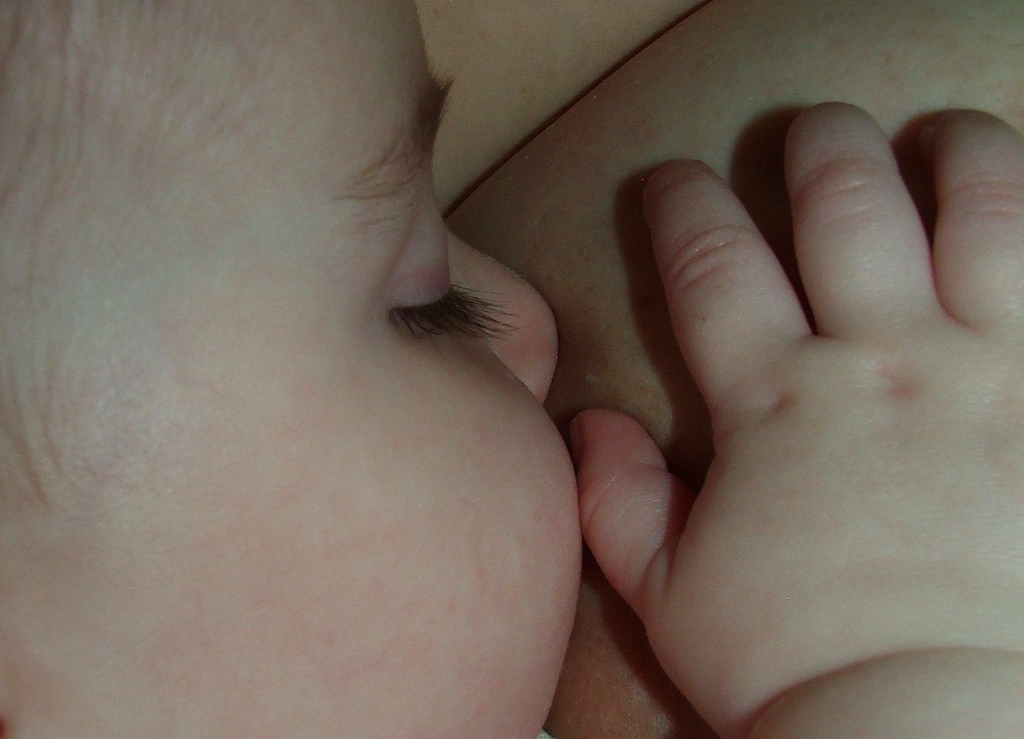
A new study offers possible clues to why babies who consume pumped breast milk are at greater risk of asthma, allergies and early obesity than those who feed straight from the breast. (File Photo: ohkylel @twitter/Flickr, CC BY-NC-ND 2.0)
A new study offers possible clues to why babies who consume pumped breast milk are at greater risk of asthma, allergies and early obesity than those who feed straight from the breast.
Senior author Meghan Azad, a research scientist at Children’s Hospital Research Institute of Manitoba, says the bacterial content differs in each scenario, with pumped milk associated with more potential pathogens and lower levels of so-called good or helpful bacteria.
She says the reasons why and how those differences impact infant health requires further study.
Azad notes previous research found variations in the associated risk of chronic disease among three modes of feeding. Formula-fed infants were associated with the greatest risk, while pumped milk was associated with an intermediate risk.
To determine why pumped milk differed from milk straight from the breast, Azad and her collaborators examined samples from 393 healthy mothers three to four months after giving birth. They considered whether the mother delivered vaginally or by caesarean section, if she had previous babies, was overweight, and her age, diet, and ethnicity.
Azad says the one factor consistently associated with differences in microbes was whether or not a pump was sometimes used. The findings were published Wednesday in the journal Cell Host & Microbe.
“I wouldn’t want a message from the paper to be that pumped milk is bad because I don’t think that’s the case,” adds Azad, who is also a Canada research chair in Developmental Origins of Chronic Disease at the University of Manitoba.
“In our other research we’ve shown it’s certainly better than formula, but it’s not equivalent to feeding at the breast. So I think we still have more research to do before we know what impact it has on infant health.”
In the research, pumped milk was linked to lower levels of bifidobacteria — the type that usually dominates the infant gut and is considered healthy.
Pumped milk was also associated with higher levels of potential pathogens that might be harmful in some scenarios, such was whether immunity is compromised or what other bacteria is in the gut.
Azad says researchers can’t definitively say pumped milk puts a baby at greater risk of developing allergies, asthma or early obesity. More needs to be learned about why the milk profile differs.
“We’re not sure if they’re coming from the pump, if the pumps are not being sterilized properly or if it’s just a matter of them lacking the bifidobacteria and the bifidobacteria are crowding out these other ones in a normal scenario.”
For example, if the bacterial difference is a matter of how pumped milk is stored, that can be addressed through better storage methods, she says. If the difference is due to the act of feeding and skin-to-skin contact, mothers can do that without breastfeeding.
Experts differ in their theories about where microbes in breast milk come from.
Some suspect it migrates from the mother’s own gut to the mammary gland and then gets into the milk. Another school of thought is that the environment, especially the infant’s own oral cavity, affect the milk’s profile.
“When a baby is suckling at the breast there’s actually some backwash that makes it back into the breast,” Azad explains.
“Probably a combination of those two theories is happening but our data on the differences of feeding modes supports the latter. If a baby is not suckling at the breast and the breast milk is always being pumped then you wouldn’t have that contact.”
Azad says the research only explains less than a third of bacterial variation in breast milk.
Other variations could be related to genetics, the home environment, chemicals present in the infant’s household, or random causes, she says.
Data was drawn from a longitudinal birth cohort study of more than 3,500 pregnant women who gave birth between 2009 and 2012 in Vancouver, Edmonton, Winnipeg and Toronto. That broad study, known as the CHILD study — which stands for Canadian Healthy Infant Longitudinal Development — is following the children from before birth to school age and beyond.
Azad says she hopes the findings further underscore the importance of enacting policies that can support breastfeeding.
She acknowledges that some mothers have no choice but to pump their breast milk first, especially in the United States where many do not get maternity leave.
“They have to be at work so it’s either pumped milk or no breast milk,” she says. “Any breast milk is always better than none, any duration is better than none. It is a lot of hard work and it is sometimes the only way that moms can provide it.”