Headline
Indonesia’s new leader faces early popularity test as he grapples with cutting fuel subsidies

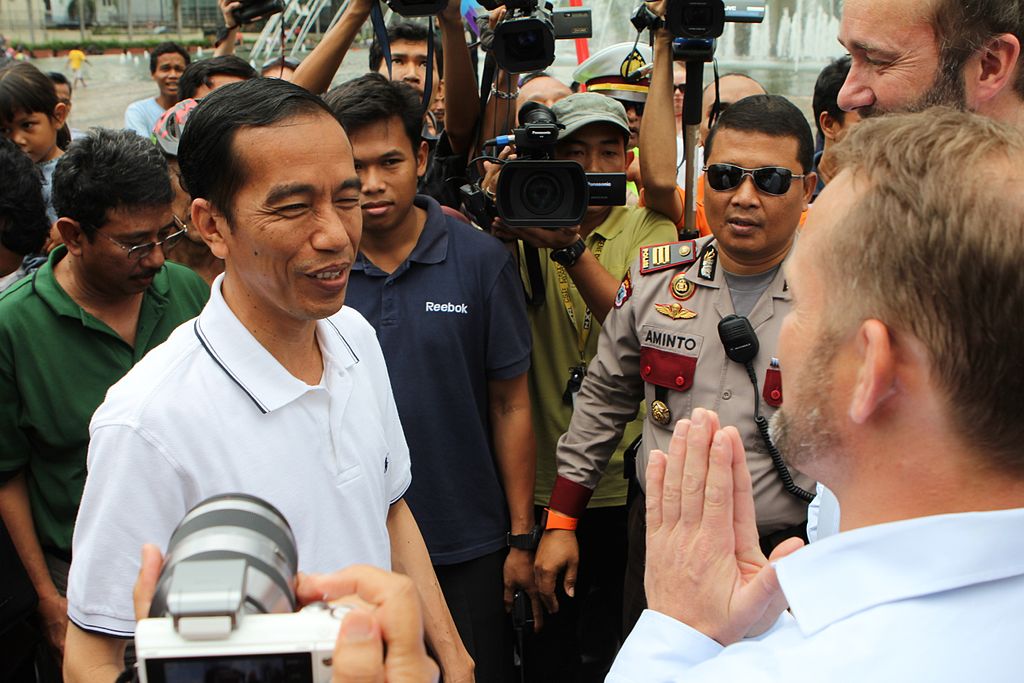
President-elect Joko Widodo. Photo by Øystein Solvang / NHD / Flickr.
JAKARTA, Indonesia—The first item on the to-do list of Indonesia’s president-elect is one that successive leaders have struggled with, and could be his toughest: how to wean the country off fuel subsidies that make gasoline almost as cheap as bottled water.
Each year the subsidies cost Indonesia billions of dollars that economists agree would be better spent on creating jobs and building badly needed roads, schools and hospitals in Southeast Asia’s largest economy.
The problem for President-elect Joko Widodo, publicly known as Jokowi, is that Indonesians are accustomed to some of the cheapest fuel in the world. The subsidies also indirectly keep the cost of public transport and basic foodstuffs affordable, an important consideration in a country where about half of the 240 million people survive on $2 a day.
Widodo had been hoping for help from outgoing President Susilo Bambang Yudhoyono, who could have cut the subsidies before leaving office on October 20, deflecting some of the public anger and political heat away from the new leader. But Yudhoyono, who raised prices last year by 44 per cent after delaying for five years, declined Widodo’s request, saying he had “taken pity” on the people.
Widodo, who won the election convincingly after a campaign that stressed his working class roots and record of progressive leadership as Jakarta governor, has pledged to reduce the subsidy bill, even as members of his own political party urge him not to. They fear more expensive fuel will cut short any honeymoon period.
“I am ready to be unpopular,” Widodo said last week. “We will reduce the fuel subsidies and divert the money to fund more productive projects, seeds for farmers, pesticides, and diesel fuel for fishermen and others sector that need subsidies more.
We have to begin to change.”
Indonesia was once an oil exporter and OPEC member, but now imports crude oil and refined fuel to meet demand. It pays overseas fuel suppliers around 11,500 rupiah ($0.98) per litre, but sells it to Indonesians at 6,500 ($0.55) per litre. That’s close to the cost of a litre of bottled drinking water, which range in price from 3,500 to 10,000 rupiah depending on brand and outlet.
The fuel subsidy bill last year totalled $16.5 billion, which was 20 per cent of the government budget. That will rise further this year if the world oil price increases.
Cheap fuel also encourages consumption as can be seen in the still-widespread habit of Indonesian drivers to run their engines for several minutes to “warm up” their car before departing on a journey. Fuel imports add to the country’s trade deficit, leaving the rupiah vulnerable to sudden and potentially destabilizing weakness.
Cutting subsidies would send a signal to financial markets and investors that the Jokowi administration is committed to getting government finances in order in a country where economic growth has fallen to its lowest level in almost five years.
In recent weeks the government’s mismanagement of the fuel situation has been on display. State-owned oil company Pertamina began limiting supplies to fuel stations, fearing it would fun out of subsidized fuel. This sparked panic buying and led to hours-long queues on Java island, home to more than half of the country’s people.
Faisal Basri, a former economic adviser to Yudhoyono, described the subsidized fuel policy as a “cancer that risks spreading to the whole economy.” He said that two 20 per cent hikes, one in September and one early next year, would be enough to help end the dependence.
“If we do that, then we can move full speed ahead in 2016 and escape from this myth” of the need for subsidized fuel, he wrote in a recent blog post.
The Yudhoyono government tried to create public awareness that that the main beneficiaries of cheap fuel are the middle and upper classes, who drive cars and have large houses with multiple air conditioners and appliances. It gave cash handouts to the poor to try and cushion the blow of subsidy reductions, something that Widodo is also committed to doing.
But the effectiveness of that message was clouded by corruption scandals involving government officials and the wasteful spending of the political elite in general. Any leader who cuts subsidies is painted by most political parties and much of the media as being anti-poor. There is also pressure from the growing numbers of first-time car and motorbike owners.
In 1998, former dictator Suharto cut subsidies as a condition of receiving a bailout fund from the International Monetary Fund. The move sparked rioting that ultimately led to his downfall.
Protests and street unrest have erupted each time a government has cut subsidies since then.
Widodo is almost certain to face similar opposition. The coalition that nominated his challenger has yet to formally concede and has vowed to disrupt his administration. Even members of the political party that nominated Widodo for president are opposed to any move to raise the fuel prices.
“I personally do not agree with the plan to raise fuel prices before the new government has tried to overcome the deficit by making other sectors more efficient,” said Maruarar Sirait, a lawmaker with Widodo’s Indonesian Democratic Party of Struggle.
Brummitt reported from Singapore.